


Introduction
The manufacturing industry is undergoing a profound transformation, driven by rapid technological advancements and evolving market demands. Among these innovations, 3D printing—also known as additive manufacturing—has emerged as a game-changer. It is reshaping how products are designed, produced, and distributed. As companies strive for efficiency, customization, and sustainability, the future of sales of 3D printed parts in manufacturing looks increasingly promising.
The Rise of 3D Printing in Manufacturing
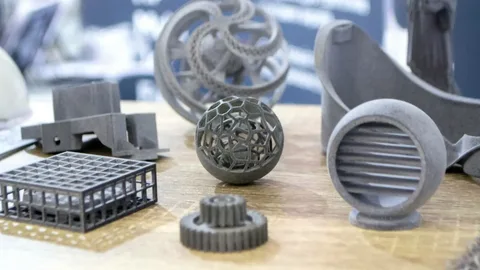
3D printing has moved far beyond prototyping. Today, it is widely used for producing end-use parts across industries such as aerospace, automotive, healthcare, and consumer goods. This shift has been fueled by improvements in material science, printer capabilities, and cost efficiency.
Manufacturers are now able to produce complex geometries that were previously impossible or too expensive with traditional methods. This capability not only reduces waste but also shortens production cycles. As a result, businesses can respond faster to market needs, giving them a competitive edge.
Changing Sales Models
The sales landscape for manufactured parts is evolving alongside production technologies. Traditional supply chains are being replaced by more agile, digital-first approaches. Instead of mass-producing and storing inventory, companies can now produce parts on demand.
Digital inventories are becoming the norm, where design files are stored and shared globally. Customers can order parts that are printed locally, reducing shipping costs and lead times. This shift is expected to significantly impact how sales teams operate, focusing more on digital solutions and customer experience rather than physical stock management.
Customization and Consumer Demand
One of the most significant advantages of 3D printing is customization. Customers increasingly expect products tailored to their specific needs, and additive manufacturing makes this feasible at scale.
From personalized medical implants to custom automotive components, the ability to deliver unique products is transforming customer expectations. This trend is expected to drive higher demand and open new revenue streams for manufacturers.
In niche markets, specialized components such as Polymer 80 frames have demonstrated how customization and decentralized production can meet specific consumer demands efficiently. The adaptability of Polymer 80 products highlights the broader potential of 3D printed parts in catering to individualized requirements.
The Role of Advanced Materials
Material innovation is another key factor shaping the future of 3D printed parts. Modern printers can work with metals, ceramics, and high-performance polymers, enabling the production of durable and functional components.
High-strength polymer-based parts, including those similar in concept to Polymer 80 components, are becoming increasingly viable for industrial use. These materials offer a balance of strength, flexibility, and cost-effectiveness, making them ideal for a wide range of applications.
As research continues, we can expect even more advanced materials that will further expand the capabilities of 3D printing in manufacturing.
Challenges to Overcome
Despite its advantages, 3D printing still faces several challenges. Quality control, standardization, and scalability remain key concerns for manufacturers. Ensuring consistent output across different machines and locations is critical for widespread adoption.
Additionally, regulatory frameworks are still catching up with technological advancements. Products like Polymer 80 components have also sparked discussions around compliance and oversight, highlighting the need for clear guidelines in the industry.
Addressing these challenges will be essential for unlocking the full commercial potential of 3D printed parts.
Sustainability and Environmental Impact
Sustainability is becoming a major driver in manufacturing decisions. 3D printing offers several environmental benefits, including reduced material waste, lower energy consumption, and localized production.
By producing only what is needed, manufacturers can significantly cut down on excess inventory and waste. This aligns with global efforts to create more sustainable and responsible production systems.
As environmental regulations tighten, the demand for eco-friendly manufacturing solutions is expected to boost the adoption and sales of 3D printed parts.
The Future Outlook
The future of sales of 3D printed parts in manufacturing is bright, with continued growth expected across multiple sectors. As technology advances and costs decrease, more companies will integrate additive manufacturing into their operations.
Sales strategies will increasingly focus on digital platforms, customization, and rapid delivery. Businesses that embrace these changes will be better positioned to thrive in an increasingly competitive market.
Innovations inspired by products like Polymer 80 demonstrate how niche applications can influence broader industry trends. As these technologies mature, they will redefine how manufacturers create and sell their products.
Conclusion
3D printing is not just a technological advancement—it is a fundamental shift in how manufacturing operates. From transforming supply chains to enabling mass customization, its impact is far-reaching.
As the industry continues to evolve, the sales of 3D printed parts will play a crucial role in shaping the future of manufacturing. Companies that adapt to this new paradigm will unlock unprecedented opportunities for growth, efficiency, and innovation.