


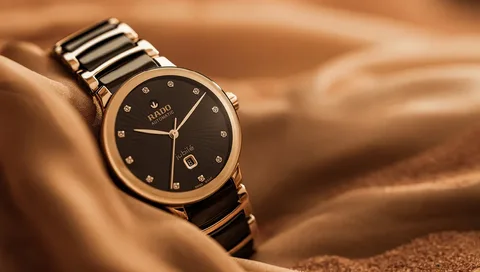
Comparing Rado watches and Tissot watches, not every buyer is just obliged to choose between two Swiss brands. They are considering artistry, creativity, status, and value in the long run. Both brands have established good reputations within the international watch industry but they attract different values. There are those customers who are concerned with high quality materials and exclusive design and those who prefer high quality Swiss performance at a more affordable price. It is at this point that the value debate comes into play particularly.
Watchmaking value is not so much about a cheaper price. It covers durability, quality of movement, resale value, longevity of design and the experience of many years of ownership. An expensive watch can be more valuable in the long run as long as it is durable and has desirability. Conversely, a cheaper watch may be a superior option when it can offer reliable functionality with a lesser number of compromises made. Knowing how Rado watches and Tissot watches are tackling these areas assists the buyers to make a wise and practical choice.
Both brands are under the umbrella of Swatch Group but they serve different market positions. Rado tends to be more innovative, more high-tech, more modern luxury in its design. Tissot has established its strength by the traditional Swiss watchmaking, accessibility, and wide variety of models. This makes a very interesting analogy particularly to buyers who are thinking of their first Swiss watch or those wanting to upgrade. The superior value is based on the value that is important to the wearer.
Brand Heritage and Reputation
Rado has achieved recognition in taking the innovation of materials a step further than most of the competitors. The brand, in particular, gained popularity due to the scratch-resistant high-technology ceramic and futuristic styling that contrasts with the classic Swiss watch looks. The Rado watches have earned a reputation over the decades of experimenting with design, and being durable. Rado can be a more design-oriented optionto a buyer who is attracted by something unique and not conventional.
Tissot has a far richer history that reaches back to the nineteenth century and that history is part of its charm. The brand has always positioned as a manufacturer of quality Swiss timepieces at affordable prices. Tissot watches have a wide range of customers since they offer both classic dresses and sport chronographs and even touchscreen models. This flexibility has enabled Tissot to be one of the most well-known Swiss brands amongst the entry level and mid-level consumers across the globe.
Both brands are not less credible than their competitors, however, regarding reputation, they are different in terms of their strengths. Rado is a brand with particularly more prestige in design-oriented circles, whereasTissot is more recognized in the mass-market. Buyers that appreciate the concept of understated luxury and material innovation can perceive Rado as a premium worth. Individuals who value tradition and reliable daily Swiss timepieces might consider Tissot to be the wiser choice. The reputation is important since it tends to affect the long-term satisfaction and resale perception.
Design Philosophy and Aesthetic Appeal
Design language is one of the most prominent differences between Rado watches and Tissot watches. Rado often adopts smooth lines, blank dials, and materials that provide the watches with a modern architectural touch. The collections like the Captain Cook and True series demonstrate how the brand strikes a balance between vintage inspiration and modern implementation. This is one of the reasons why many buyers gravitate towards Rado due to the visual difference that the company possesses compared to the traditional Swiss sports or dress watch formula.
Tissot, in his turn, is more inclined to adhere to a greater stylistic diversity as opposed to a single signature look. The PRX line has received massive publicity in regards to integrated bracelet styling, and collections such as Le Locle and Seastar are more traditionally oriented. This variety renders Tissot watches appealing to a buyer who desires the choice in the different styles without moving out of the brand. To a person who is making a collection, such flexibility can be very valuable.
Design value tends to be based on whether or not a buyer desires originality or variety. Rado can be more exclusive as there are not many brands that deal with ceramic and unique shapes so much. Tissot is more affordable and has styles that can be worn in the office or when diving or on a daily basis. Assuming personal expression is the most important, Rado might have a reason to be more expensive. When flexibility in various events is more important, then Tissot usually provides better value.
Materials and Build Quality Comparison
Where the Rado watches can most certainly build their strongest argument is the quality of the materials. Great scratch resistance and visual longevity is also aided by high-tech ceramic, sapphire crystals and hardened surfaces. The fact that a ceramic Rado still looks polished after several years with only traces of wear has been appreciated by many of its owners. Such durability can be converted into the actuallong term value, especially to the purchasers who use the watch regularly.
Tissot tends to be more traditional in their materials, such as stainless steel, sapphire crystals, and solid construction standards anticipated in Swiss watchmaking. These materials might not be as innovative as the ceramic items offered by Rado, but Tissot watches are good in terms of durability at the price. Cases and bracelets tend to be over the top in their own category especially popular models where finishing competes with more expensive models. A key consideration that makes Tissot worthy of praise is that balance.
In terms of pure materials, Rado usually prevails. Nevertheless, superior materials do not necessarily equate to superior overall value in case of substantial rise in price. A consumer with a desire to use the latest materials and have a lower wear rate can rationalize the high price of Rado. Anyone used to conventional steel building might find that Tissot can supply almost everything at a reduced price. The decision, in the context of material-driven value, is largely influenced by the degree of emphasis that the buyer puts on innovation.
Movement and Performance Features
Another key point of consideration in terms of value is Swiss movement quality. A lot of Rado watches operate in the dependable automatic mechanisms, commonly with increased power reserves and current-engineering enhancements. Performance is usually good and the focus is usually on reliable mechanics with quality presentation. Rado is not commonly purchased with the purpose of being technologically innovative in terms of movement, but overall provides quality that is within its price range.
Tissot has established a reputation on value of movement to a great extent. The Tissot watches are highly competitive in the segment with Powermatic automatic calibers, quartz precision, and sports oriented chronographs. The sheer power reserves of most of the Tissot automatics tend to be more than what is expected of their price range. Tissot might be of special interest to those who want a powerful specification, but do not want to venture into the realm of luxury pricing.
Tissot tends to be the best in terms of performance per dollar. Improved movement technology is often offered at prices that are much lower than those charged by many Swiss competitors. Rado have reliable mechanics, although some of its increased cost is in materials and design, not just in the superiority of movement. Tissot might offer the better proposition to buyers whose interest lies entirely in the technical value. To people who appreciate the whole package of movement, materials and design, Rado is still very competitive.
Price Range and Long-Term Value
Price is where the gap between the Rado watches and Tissot watches cannot go unnoticed. Tissot watches are typically more affordable, making Swiss watches more accessible. This makes Tissot the more accessible watch – especially if you are buying for the first time. It also minimizes the financial risk yet it produces genuine Swiss quality.
Rado is more positioned in the higher pricing tier although the brand tends to compensate this with material innovation, finishing and superior luxury positioning. Most buyers find this valuable since once a Rado is chosen well, it can always be relevant and appealing over the decades. Long-term value involves more than just purchase cost. It encompasses toughness, reduced aesthetic wear and even the degree to which the watch is pleasant to wear.
Resale value depends on model and not on brand but some popular Tissot watches can do surprisingly well as compared to purchase price. Rado watches, especially unique or collectible watches, can also be effectively valuable. In case it is the cost-effectiveness, Tissot can be the victor. If the overall value of ownership and high-quality materials are more important, Rado can be a better choice, despite the higher price tag.
Which Brand Offers Better Value for Different Buyers?
Tissot can be a better value to first-time buyers of Swiss watches. The brand offers excellent movement quality, familiar heritage, and a variety of styles at affordable prices. If you’re looking for a practical watch, the Tissot watches may be hard to match. Their low price and performance level make them particularly appealing to consumers who would be less concerned about exclusivity and more focused on functionality.
To consumers who highly value design, comfort, and sophisticated material, the Rado watches can provide a greater value even when they are more expensive. High-tech ceramic can also offer some benefits that can be seen daily particularly in wear resistance and lightweight comfort. These attributes are usually worth the premium to buyers who value modern luxury. The value, in this instance, is of a higher level of ownership experience.
Both brands may even find a place in the eyes of collectors. Tissot becomes a functional watch for sports or daily wear, while Rado offers design flair to the collection. This brings out a significant aspect in the value debate. The superior brand is not universal. It is based on the preferences of the buyer in terms of affordability, innovation, beauty, or long-term ownership satisfaction.
Final Verdict
Then, which is more valuable Rado watches or Tissot watches? When value is equated to maximum performance and Swiss trustworthiness on minimum investment, Tissot usually leads the pack. The company consistently produces spectacular quality at a price which many buyers would regard as affordable hence making it one of the best value-oriented brands in the Swiss watch making industry.
If value means superior materials, creative design, and durability, Rado is a good alternative. The increased cost is usually based on true innovativeness and luxury positioning more than branding. To the customers that value such attributes, Rado watches may be a great deal regardless of the high price.
In the end, Tissot watches tend to be better value for those who want a practical, affordable watch, while Rado watches may be better value for those who want a watch that is innovative and luxurious. The more appropriate option is not necessarily based on which brand is objectively better, but rather on what type of value is the most important to you. Both brands can be a rewarding investment when you select it according to your priorities.