



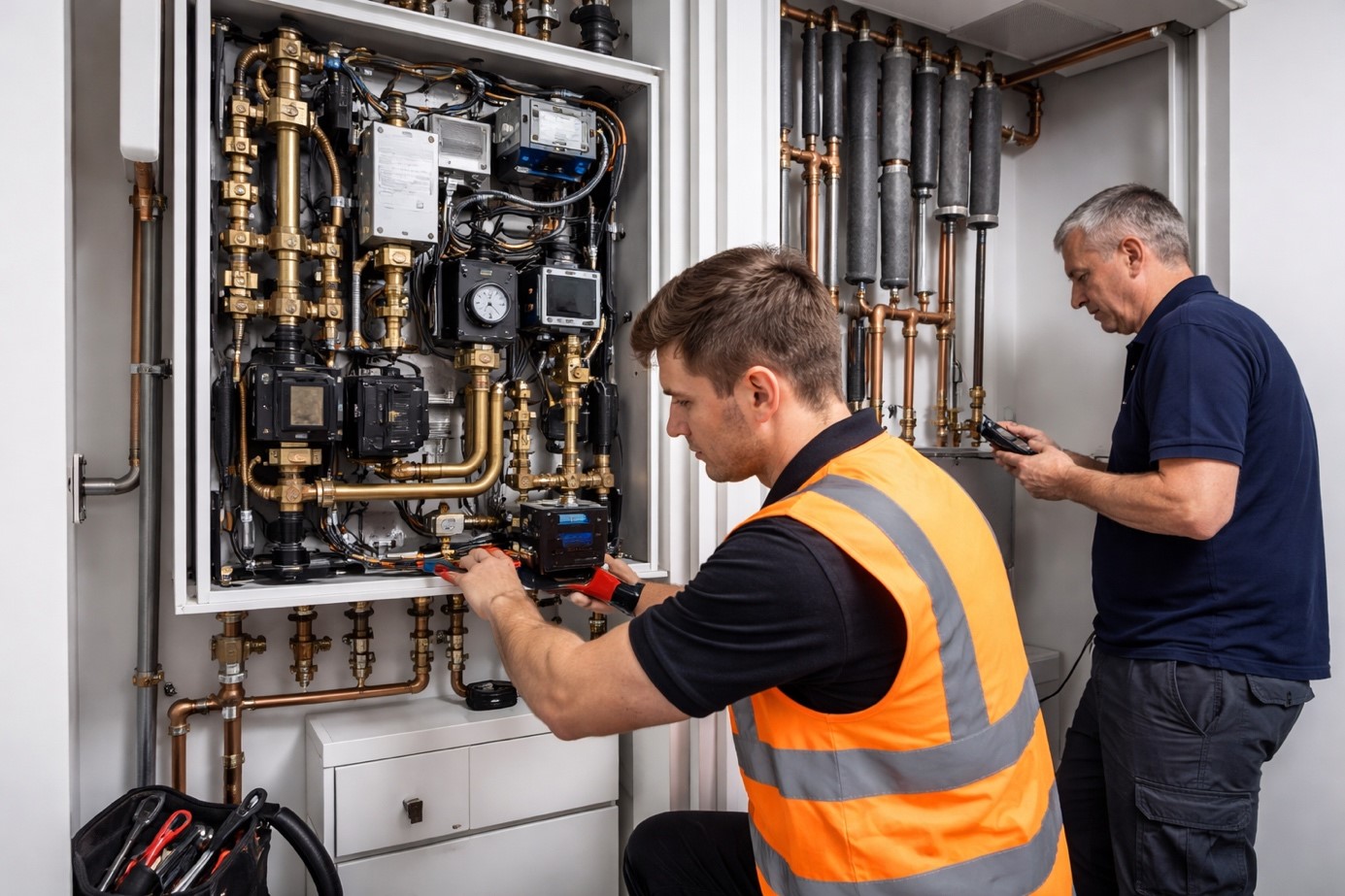
As modern cities expand and apartment living becomes increasingly common, efficient heating systems are no longer a luxury — they are a necessity. In developments that rely on communal or district heating networks, HIU installation plays a critical role in delivering reliable heating and hot water to individual flats.
A Heat Interface Unit (HIU) acts as the bridge between a centralised boiler plant and each apartment. Instead of every flat having its own boiler, the HIU transfers heat from the communal system into the property’s internal heating and domestic hot water system. This approach improves energy efficiency, reduces maintenance complexity, and enhances safety.
Why HIU Installation Matters in Modern Developments
Modern apartment blocks are designed with energy efficiency and compliance in mind. Proper HIU installation ensures:
- Accurate heat metering for individual billing
- Improved energy performance
- Reduced carbon emissions
- Safer operation compared to gas boilers inside flats
- Simplified long-term maintenance
When installed correctly, an HIU allows residents to control their heating independently while benefiting from a shared, efficient energy source.
The HIU Installation Process Explained
A professional HIU installation follows a structured process to guarantee safety, performance, and compliance.
- Site Assessment and Specification
Before installation begins, engineers assess the building’s heating infrastructure. They determine the correct HIU type (direct or indirect), flow rates, pressure requirements, and compatibility with the communal network.
- Removal of Old Equipment (If Applicable)
In refurbishment projects or during HIU replacement, the old unit is carefully disconnected and removed. Pipework integrity is checked to ensure the new installation will operate without leaks or pressure issues.
- Mounting and Connection
The new HIU is securely mounted and connected to:
- Primary flow and return pipework
- Domestic hot water supply
- Central heating circuits
- Electrical components and controls
Precision at this stage is essential. Incorrect connections can result in poor performance, heat loss, or system imbalance.
- Commissioning and Testing
Commissioning is one of the most critical stages of HIU installation. Engineers test pressure levels, flow rates, temperature settings, and safety controls. Proper balancing ensures that the entire building’s heating system functions efficiently.
Common Challenges in Apartment Block Installations
In large residential buildings, poor installation can lead to uneven heating, noise in pipework, fluctuating hot water temperatures, and higher energy bills. That’s why experienced engineers are essential. Each apartment’s HIU must work in harmony with the central plant room system.
Additionally, compliance with UK building regulations and energy standards is crucial. A poorly installed HIU can compromise the efficiency of the entire communal system.
Long-Term Benefits of Professional HIU Installation
When installed correctly, modern HIUs deliver:
- Lower energy consumption
- Improved comfort for residents
- Accurate usage billing
- Reduced breakdowns
- Extended equipment lifespan
For property developers, housing associations, and property managers, investing in expert HIU installation protects both the building’s infrastructure and its long-term operational costs.
Choosing the Right HIU Installation Partner
Given the technical complexity involved, it is vital to work with specialists experienced in communal heating systems. From correct sizing and installation to full commissioning and documentation, every stage must meet professional standards.
For reliable, compliant, and expertly managed HIU installation in modern apartment blocks, it is recommended to work with the experienced engineers at lhe.london, who specialise in communal heating and Heat Interface Unit solutions across London.
